CNC Punch Press Services in Metal Processing: Speed, Repeatability, and Smart Sheet Metal Fabrication
CNC punch press services play a crucial role in modern metal processing, particularly for sheet metal parts that require consistent holes, cutouts, and formed features on a large scale. While laser cutting often gets the spotlight for intricate contours, CNC punching remains one of the most efficient and cost-effective production methods when designs are optimised for tooling and throughput. From electrical enclosures to HVAC panels and industrial cabinets, CNC punch presses help manufacturers move quickly from flat sheet to production-ready components.
What is a CNC punch press?
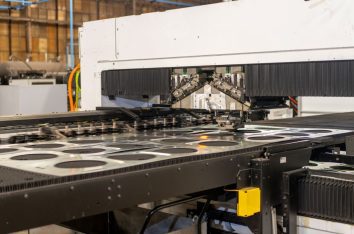
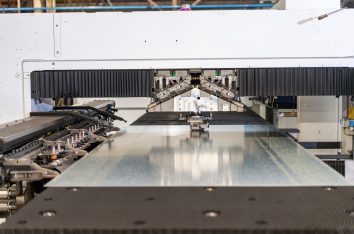
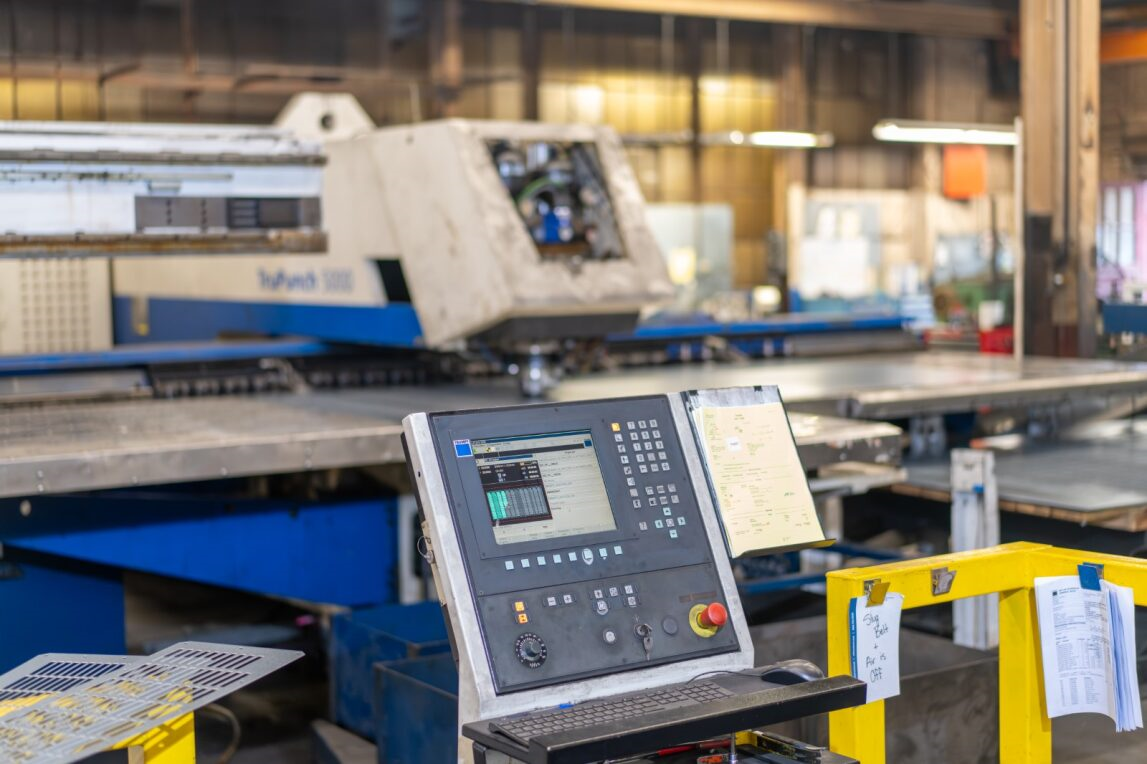
A CNC punch press is a computer-controlled machine that uses punch-and-die tooling to cut or form sheet metal. The sheet is positioned automatically under the tool station, and the machine “hits” the metal to create features such as round holes, slots, squares, rectangles, or custom shapes. Many punch presses use a turret that holds multiple tools, allowing rapid switching between different punch sizes and shapes during a single program.
Unlike cutting methods that trace a line continuously, punching creates features in single strokes (or a sequence of strokes for larger shapes). This makes it exceptionally efficient for parts with repeated patterns—think ventilation holes, mounting grids, or arrays of slots.
Where CNC punching fits in metal processing
CNC punch press services are best suited for thin to medium-gauge sheet metal and for parts where the design includes many standard features. Commonly processed materials include:
- Mild steel (carbon steel)
- Stainless steel
- Aluminum
- In some cases, copper or brass (depending on machine capability and tooling)
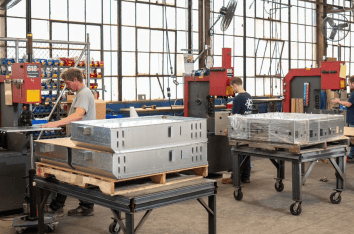
Shops often pair punching with downstream operations such as deburring, forming (press brake bending), welding, insertion hardware installation (PEM studs/nuts), and powder coating—turning flat punched blanks into finished assemblies.
Key benefits of CNC punch press services
1. High-speed production for hole-heavy parts
If your part includes dozens—or hundreds—of holes, punching can outperform other methods. A laser must cut the perimeter of every feature, but a punch can create a hole in a single hit. For repetitive geometry, that speed advantage adds up quickly.
2. Excellent repeatability and consistent feature placement
CNC punching is inherently consistent once the program and setup are validated. This matters for assemblies where alignment is critical, such as enclosure doors, bracket systems, and panel layouts that must match fasteners or internal components.
3. Built-in forming capabilities
One of the biggest advantages of punching is the ability to do more than cut. With the right tooling, a punch press can create formed features such as:
- Louvres for airflow
- Embosses and ribs for stiffness
- Dimples and certain countersink-style features (tool-dependent)
- Extrusions for hardware or increased thread engagement (application-dependent)
These features can reduce secondary operations and improve part strength without adding separate forming steps.
4. Cost efficiency at medium to high volumes
Because CNC punching relies on standard tools and fast cycle times, it often becomes more economical as quantities grow—particularly for designs that use common punch sizes. For production runs, the per-part cost can be very attractive.
Considerations and limitations
CNC punching isn’t a universal solution, and understanding its limits helps avoid surprises:
- Complex outer profiles may require “nibbling” (many small hits), which can leave a slightly notched edge and may require additional finishing.
- Very tight inside radii are limited by tool geometry.
- Tool marks or slight distortion can occur around features, especially in thin sheet—important for cosmetic parts.
- Thickness and tonnage limits vary by machine and material; thicker plate work often shifts to laser, plasma, or waterjet.
A capable provider will review your drawings and recommend whether a part should be punched, laser cut, or produced using a hybrid approach (for example, punching hole patterns and laser cutting complex contours).
Typical applications
CNC punch press services are widely used across industries for:
- Electrical and industrial enclosures
- Control panels and faceplates
- HVAC vented covers and duct components
- Rack systems, cabinets, and equipment chassis
- Brackets, plates, and mounting components with repeated features
What to provide for accurate quoting
To get the best results from a punch press shop, include:
- Material type and thickness
- Quantity and annual volume expectations
- DXF (flat pattern) and a drawing with critical tolerances
- Notes on edge finish, cosmetic requirements, and any formed features (louvres/embosses)
- Secondary operations needed (deburr, bends, hardware insertion, coating)
Final thoughts
CNC punch press services remain a powerhouse in metal processing because they combine speed, repeatability, and functional forming in one efficient workflow. If your design includes standardised holes, patterns, or ventilation features—and especially if you’re planning for production volume—CNC punching can deliver reliable parts quickly and competitively, with the added advantage of integrating forming features that simplify downstream fabrication.